
This is the story of the long road to today’s HF-Memo. For years the phone industry ran ahead of us: new phones and new platforms kept arriving, and that held back larger sales of our earlier solutions. But every turn also brought us closer to our slogan: “Eyes on the road and hands on the wheel.” We were a step behind – but not anymore. Thank you for your support. Together we can reach the goal.
Juhani Kamppinen, CEO and owner, JK Tuote Lanser Oy
The founder
Why my company exists
After school I studied mechanical engineering to bachelor level, followed by economics and marketing, and then went to work. After some years as a mechanical engineer I took a year off to study microelectronics and programming. During that year I founded my own company – its first programming project grew out of the course.
Lee Iacocca’s autobiography and the story of the Ford Mustang launch inspired me, and I thought: “This is why my company exists.” I designed the logo and started looking for the next project, which turned out to be anything but easy.

1989
An idea in two hands
In 1989 I read in a business journal that an inventors’ association was looking for companies to commercialise its members’ ideas. I placed an advertisement in their magazine – “Commercialising the product idea into the market” – and one inventor came to see me. He had two hundred ideas, he said, and here was one free of charge: an Ericsson car phone in his right hand and a Dictaphone in his left. Back then the transceiver was a big box at the rear of the car and the handset sat on the dashboard. I had one myself, made by Nokia Mobira.
I knew at once: this is it. I had no idea how long the project would last – I thought it was just an adapter. The journey had started.
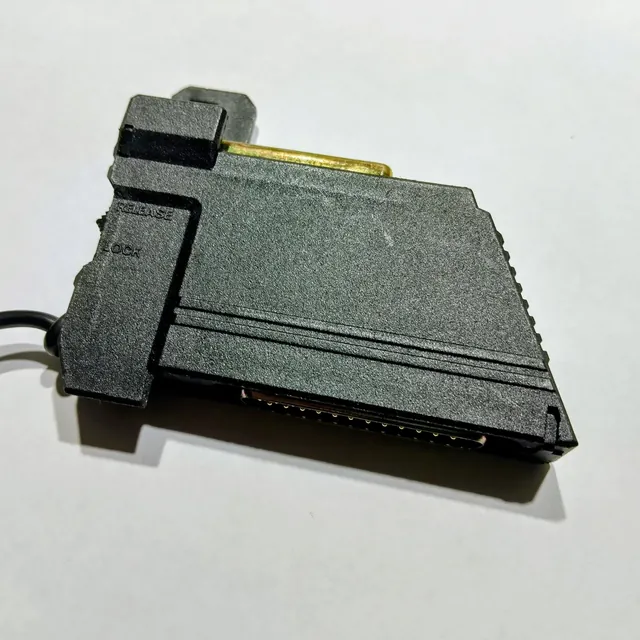
I had seen how fast mobile phone sales were growing, and I had already talked about building an accessory with a friend – a self-taught electronics expert working for a Nokia Mobira service company. The question was how to get access to the audio channels. He knew of the phone manufacturer’s data adapter. I bought one the same day, took the electronics out and asked him to build ours inside.
After successful tests with my own phone, a friend who had joined as a minor shareholder – an airline captain by profession – arranged a meeting with Nokia Mobira. The presentation went well, and we were able to buy data-adapter covers for a batch of our own circuit boards. To our surprise, we still weren’t allowed to sell: first we needed an authorisation from the phone manufacturer, and then the product had to pass testing at a telecommunications lab. In the end, the product was licensed for sale.
1991
Running against fast-changing phones
Meanwhile the phone manufacturer brought out new phones – and new car kits. Retailers said: nice, but do you have it for these phones? I sold some samples, but end customers couldn’t install the adapter themselves, because its interface was hidden under the car’s trim. It had to be sold to the retailers who installed the car kits.
We decided to continue, which meant investing in our own molds for the adapter covers – no longer cheap. The molds were bought in 1991. In the end we were licensed to sell adapters for the car kits of Nokia, Ericsson and Motorola GSM phones. But the move from analogue to digital GSM phones brought noise interference into the Dictaphones, and the product was still hard for end customers to install, with too many wires.
I later heard that one telephone company’s country manager called me stubborn: when applying for the certificate I insisted on the brand name “Hands Free Memo”, and he refused to let me use it. I recognised right away that the brand was good – and kept it.
1994
Selling across Europe
I sold adapters to retailers in Finland, and in Sweden after hiring a schoolboy who spoke fluent Swedish; in Italy I worked with a commission-based salesman. Italy was recommended as the place to start, because handsfree kits were mandatory there. The same remote phone-selling concept failed in Germany for lack of fluent German. Mobile phone accessories were a hot topic, and we were not alone.
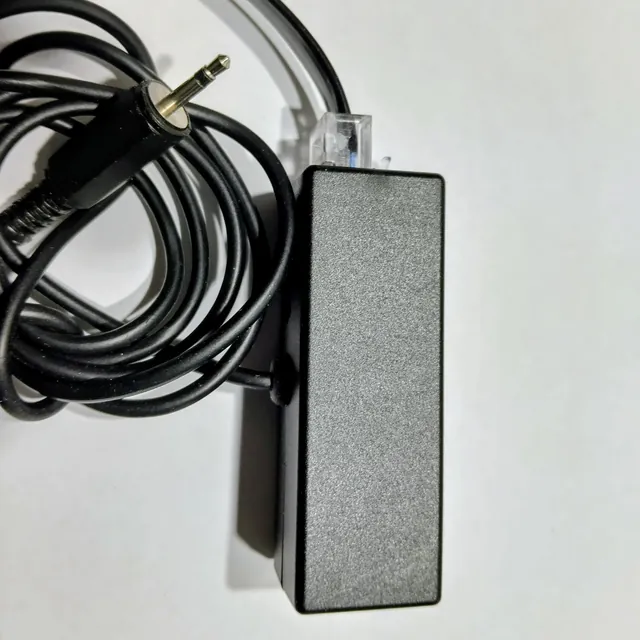
On one trip from Italy northwards with my wife, I visited the European distributor of Olympus Dictaphones in Hamburg. Their US distributor had “invented” a similar adapter – neither of us knew about the other’s project. Our adapter was smaller, because we had used SMD components from the very beginning. Through the distributor’s contact with a mobile phone distributor in Hamburg, we sold a batch of our adapters for Nokia car kits in Germany. The year was 1994.
Next stage
From car kits to headsets
Phones turned into smaller “pocket phones”. We dropped the Dictaphones and built a memory circuit and REC and PLAY buttons into an interface adapter for a wired headset – the idea now was to take notes of your own thoughts and of conversations. The large variety of phone interfaces made this hard again, so we concentrated on Nokia phones only.
After several rounds we had a headset interface adapter for a good-selling phone, with 11 minutes of built-in recording memory and buttons to control it. Finally we could also take power from the phone, after solving the bit flow the phone used to recognise original accessories before supplying power. For this research I used a subcontractor and a student who programmed the microcontroller.
For several years I visited the CeBIT fair in Hannover. At the booth of a large US headset distributor I presented the adapter with their wired headset, and their CEO said: “This is what we have been looking for. Could you give us a quote for 2,000 pieces?” I was excited all the way back to Hamburg. After the fair he wrote: our price was too high, and unfortunately the adapter only worked with one Nokia model. Soon phone brands began adding recording buttons to their own phones.
2008–2010
Bluetooth
Bluetooth became the wireless interface – no more physical connections. In 2008, while we were applying for the HF-Memo trademark and a utility model (“small patent”), an attorney told me about a Polish company with a recording application for Nokia Symbian phones. I travelled to Poland to get the software.
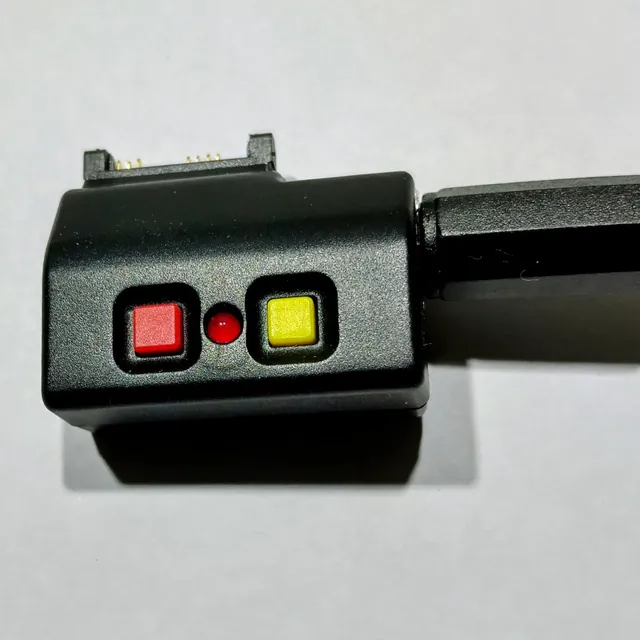
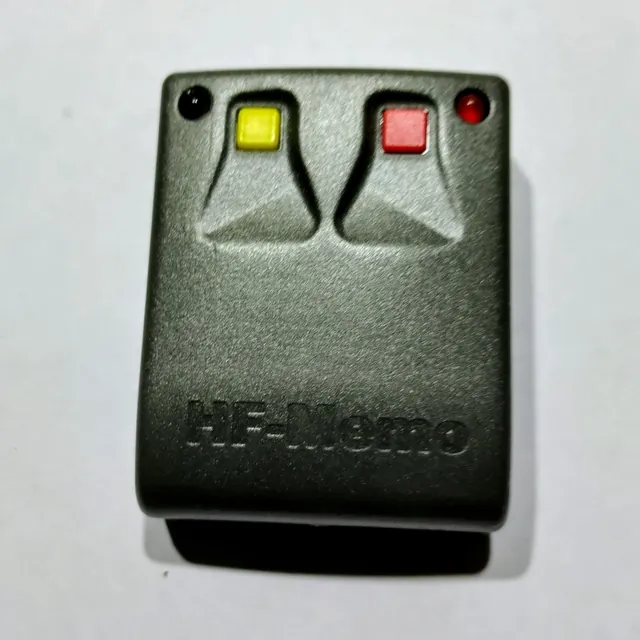
Together with a Finnish company we developed a Bluetooth remote prototype and a small series of it in 2010. It worked well with the software, using the phone’s internal memory – no noise interference. It couldn’t be attached to the steering wheel and had only REC and PLAY buttons, but I used it myself on the way to meet clients, and two-way recording worked well.
Throughout the years we made physical products, adapted them to fast-changing phones and interfaces, tried to sell them, listened to customers and kept developing. Thanks to Nokia, Finland had a network of electronics know-how that could produce small series economically. Apart from the first adapter, I bought the molds and plastic covers from a company I had co-founded years earlier.
2011–2014
Smartphones and Android
When Nokia gave up the Symbian platform, I started adapting the concept to Android phones and, in 2011, began looking for an app developer in India. After some trial and error I found our Senior Application Developer, Faiz Aalam, who works remotely from Delhi. On Android we first built recording and playback for dictation and for taking notes during calls, using our Bluetooth remote. At that time Android still allowed recording during calls. The year was 2014.
At Mobile World Congress in Barcelona in 2011 I decided that we had to focus on text to speech, and widen the product into a whole package that also helps the driver handle incoming text messages safely. The same year I signed an agreement with a Swiss company I met at the fair. It was sold soon after – and so was the Polish company we then worked with for some years. Today we use Google voices. Once we made it possible to listen to messages instead of reading them, visitors began finding our website. With our early Bluetooth device, the user still had to tap the icon of the message source on the phone – WhatsApp, for example.
2018–2019
A remote for the steering wheel
Drivers are curious about the SMS, WhatsApp messages and emails that arrive while they drive. Calls haven’t gone anywhere either, and the need to take down information easily and safely during a conversation is still there. Our purpose, however, is not to record calls but to take notes.
To do this safely – and to live up to our slogan “Eyes on the road and hands on the wheel” – I started looking for a manufacturer for a steering-wheel remote. In 2018 I received a quote from a Finnish company staffed by former Nokia employees, but it was beyond my resources. I turned to China, where I found a reasonable solution, and in spring 2019 my app developer started work with a development tool. The current remote has been available since later that year.
Today
Where we are now
The app runs well with all the features described on our product page – except recording parts of a call. Our plan is that you repeat the information you hear and it is recorded on your phone, not in a cloud. We don’t aim to record two-way conversations, only your notes. Our developer is working on a solution right now.
The certification process is under way.
What’s next
Indiegogo
We plan to start sales with an Indiegogo crowdfunding campaign as soon as possible – for early adopters, with special backer pricing for test users. Manufacturing of the steering-wheel remote and the logistics are outsourced.
Sign up to be among the first to know when the campaign starts.